手册 v0.1.0 · KaiderBooks v2.0.0 · 2026-08-02
Step 8 · Checking your own work
In one sentence
Entering isn't finishing. Five minutes of checks before you log off beats discovering a mistake at month end and re-reading three months of receipts.
1. Three checks before you log off
1. Did today's entries go to the right company
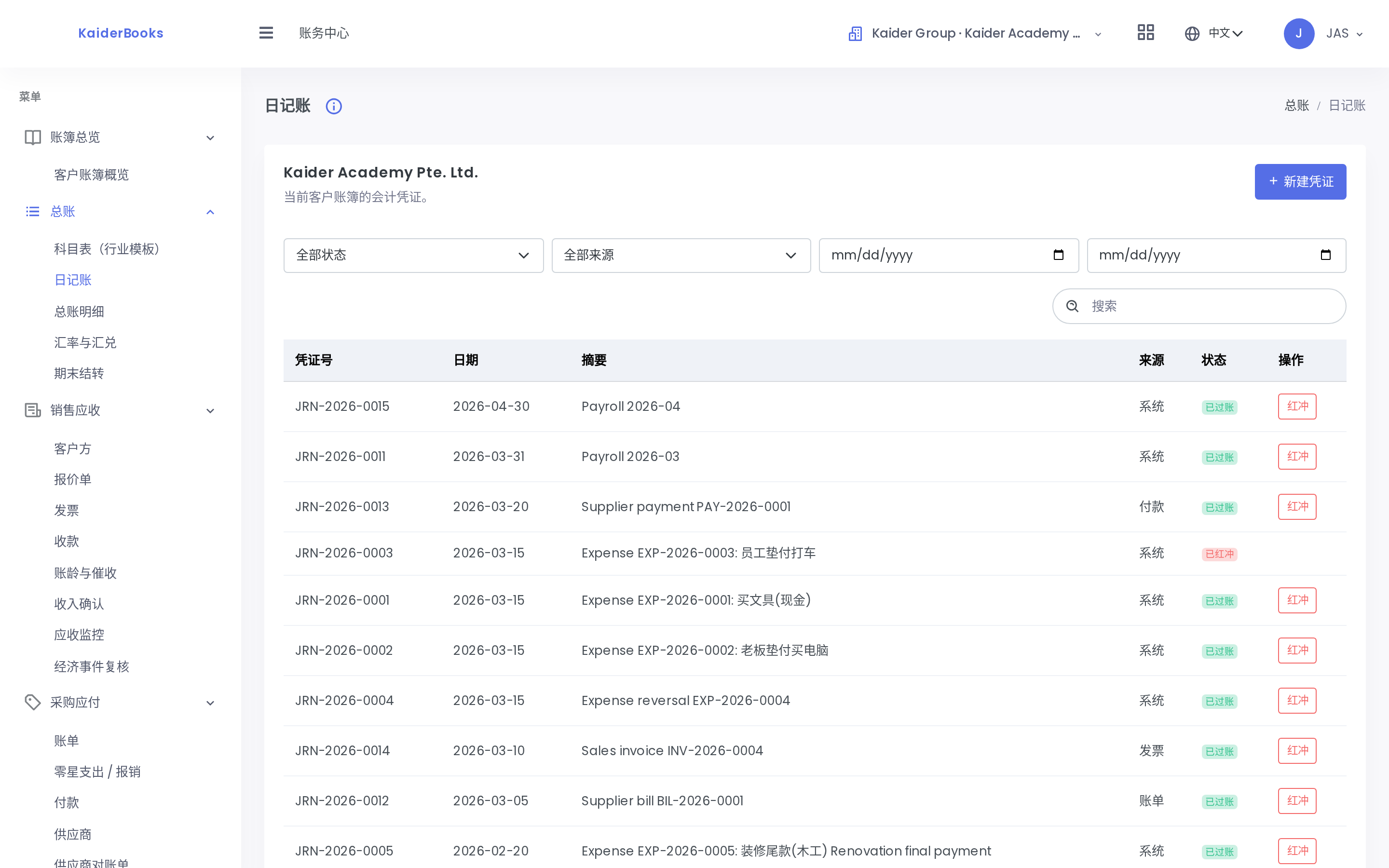
Books → General Ledger → Journals
Filter to today and scan — did anything land on another company's books?
This is the most common and most expensive mistake (see Step 1). The sooner you catch it the better — same day it's one reversal; a month later it can ripple through several reports.
2. Does the bank balance agree
Books → General Ledger → General Ledger Detail → pick 1010 Bank - Operating
Compare against the actual balance in internet banking.
A difference is normal — being unable to explain it is not
Differences usually come from:
- Cheques issued but not yet presented
- A receipt dated a day apart from the bank's value date
- A bank charge not yet recorded
An explainable difference is fine; an unexplainable one is the problem. If you can't explain it, write it down and ask John.
3. Anything still sitting in draft
- Bills: Books → Purchases (AP) → Bills — any
draft? - Invoices: Books → Sales (AR) → Invoices — any
draft?
A draft is the same as not entered. It doesn't appear in any report. This is the single most common beginner omission — you think you're done, but approval is a separate step.
2. Three more at month end
| Do this | Where | Look for |
|---|---|---|
| Payables ageing | Purchases (AP) → Aging | Who to pay, what's overdue |
| Receivables ageing | Sales (AR) → Aging | Who hasn't paid tuition |
| Trial balance | General Ledger → Ledger | Debits equal credits |

What if debits don't equal credits
They can't. Every entry is booked on both sides; the system cannot produce a one-sided journal.
If it looks unbalanced, you're almost certainly looking at a partial view — a truncated date range, or a missing account.
If it genuinely doesn't balance, stop and get John — don't adjust figures yourself.
3. Self-test: can you answer these
After your first month you should be able to answer without looking things up:
- How much did the Academy spend this month?
- How much tuition was billed, and how much is still outstanding?
- How much does the company owe the boss in advances? (
2600) - What was the staff cost this month? (salaries + employer CPF)
- How much has been spent on renovation in total? (
1440)
If you can't, something is unrecorded or in the wrong account.
4. When to escalate
| Situation | Who |
|---|---|
| Unsure whether something is an asset or an expense | John |
| A full year of tuition paid up front | John (deferred income policy) |
| Your CPF figure doesn't match the system's | Check Step 7 §1 first, then John |
| Debits don't equal credits | John, immediately |
| Can't sign in / permission denied | John |
| Posted to the wrong company | Reverse and re-enter yourself, but tell John |
Asking is not embarrassing. Guessing is
Accounting errors are invisible at the time and explode three months later — and cost ten times more to fix than to get right.
When unsure, stop and ask. There is no "close enough" in this job.